Sale Price:
$4,500.00
Original Price:
$7,500.00
Sight: 74.5 × 112 cm. Framed: 82.5 cm x 119.5 cm. Original diazo blueline print on cream-colored blueline / diazo paper, from a drawing by a CalComp plotter driven by a CDC 3200 computer. Unlike most extant examples, this one appears to show zero fading to the image, indicating that it has been shielded from light for its sixty years of existence (including in our stewardship). There are no visible rips or restorations. The copy appears to have been been trimmed—the title printed at the bottom of the piece is excised and pasted to the back of the frame. There is undulation to the paper throughout, especially along the lower edge. The work is mounted to a board, and framed under plexiglass. There is wear to the frame, and the piece has not been inspected out of frame.
Note: The buyer will pay for additional shipping costs, to be determined at the time of purchase.
Among the earliest works of computer art, Mona by the Numbers (1965) was easily the most famous in its own time. Indeed, this masterpiece is arguably the iconic work of early computer visual culture in general—one that adorned the walls of the world’s few computer centers, ultimately placing Mona alongside Snoopy and his pals as the viral images of early computing.
H. P. “Phil” Peterson created Mona by the Numbers amid a wave of cutting-edge research into early computer-controlled image scanners. This line of work proceeded from the epiphany that an analogue image could be discretized into a grid of numeric grayscale values, producing a digital image. Indeed, it was around this time that the word pixel entered the vernacular, in connection with research conducted at Caltech’s Jet Propulsion Laboratory. At the time, Peterson was working on such concerns at the Digigraphic Labs division of Control Data Corporation, one of the major computer companies of the time.
While Peterson was one of a cadre of researchers using early scanners to produce digital image data, it was his invention of a special custom font that would enable the rendering of digital images—and, in turn, the creation of one of the great works of computer art.
The glyphs in Peterson’s font represent the numbers 0–99, each of which is made slightly denser (in terms of the amount of image coverage) than its predecessor. So, for example, from a slight distance the glyph ‘55’ appears considerably darker than ‘45’, which in turns appears considerably darker than ‘35’, and so forth. With his custom font in hand, Peterson wrote a program that would drive a Control Data Model 280 Digigraphic Scanner to produce grayscale values between 0-99 for the tiny cells of a square-inch photographic slide of the original Mona Lisa.
Next, Peterson developed a CDC 3200 program to drive a Calcomp Model 564 plotter to draw a digital reformulation of Davinci’s original Mona Lisa. This program (and the plotter) operated over a grid of 256 x 390 cells, each about a tenth of an inch on a side. In each cell, the program referenced the 0-99 grayscale value of the corresponding cell in Davinci’s original, and then instructed the plotter to write that number in the cell, using the corresponding glyph from Peterson’s custom font. Really, the word 'font' doesn't do justice, given that writing a single digit entailed over sixty plotter steps!
In total, the work took sixteen hours—and sixteen million plotter steps—to plot. From this plotter drawing, prints were created using a diazo machine, and each print took about fourteen hours to produce! These prints were distributed to computer centers and other Control Data clients as a form of promotion showing the wildly new capabilities of the electronic computer and its accessories, such as image scanners and plotters.
Relative to its source work, Mona by the Numbers is remarkably accurate from even a small distance—and digital in the sense that it transduces the analogue signal of the source photographic slide into a series of discrete symbols, those being the glyphs in Peterson’s custom font. In fact, Peterson playfully situated his piece as “a ‘pure’ digital work of art” in opposition to the “insidious tendency” toward analogue forms that typified what little computer art had been produced to this point. Of course, ‘digital’ here is something of a pun, given that the image is composed of a series of digits.
Mona by the Numbers is among the earliest artworks created on a general-purpose electronic digital computer. While it served a practical marketing purpose, the piece was also closely associated with the nascent form of computer art. It appeared on the cover of the December 1965 issue of Computers and Automation, home of the annual Computer Art Contest that was first held in 1963, and it was discussed in Herbert W. Franke’s touchstone Computergraphik – Computerkunst (1971). A follow-up piece created by Peterson using the same technique, but applied to a photo of Norbert Wiener, was featured in the landmark Cybernetic Serendipity (1968) exhibition.
Most pertinently, it became the seminal work of early computer visual culture, one that worked to canonize the Mona Lisa as a viral image in the nascent culture surrounding the first ASCII art hobbyists who tinkered with line printers driven by mainframe computers.
One quirk of the diazo process is that a print will fade rapidly (in a number of days or months) if exposed to sunlight or even to fluorescent lighting. Moreover, the special diazo paper used for the diazo process is thin and brittle. Ultimately, diazo printing was intended for creating temporary copies, namely of engineering diagrams, as an alternative to the blueprint process. In total, it is not surprising that few prints survived emergence from the dark computer-center rooms where Mona by the Numbers typically hung; the prints that do survive are prone to looking like this. Moreover, as noted above, copies of this work were created by Control Data as promotional giveaways, not bona fide works of art. As such, a given copy likely would have been viewed by its recipient as readily disposable from the get-go, and especially so after it had faded from hanging under the fluorescent lighting favored in the subterranean computer rooms of the day.
This copy is remarkable for two reasons. First, it is a blue diazo print, which to our knowledge is the only such surviving example—all the other prints documented online have a sepia image. (The hue of a diazo image depends on the diazonium compound used in the coating.) Second, it documents its provenance. The copy states that it was mounted to a board in 1969 by one David Misenko of St. Paul, MN, who was apparently a crew chief at Northwest Airlines. We are not sure how he obtained this print, but it is worth noting that Control Data Corporation was headquartered just outside St. Paul, in Bloomington, MN.
We have turned up just two institutional holdings of this piece, one at the Computer History Museum and the other in the fabulous collection of computer art at ZKM. OCLC, Europeana, ArtUK, and ArtCyclopedia do not show any holdings. Private owners include Andy Patros, who maintains Digital Mona Lisa, a website dedicated to Mona by the Numbers, and the Anne and Michael Spalter Digital Art Collection, whose copy was obtained from us. We do not know how many copies were originally created.
Sight: 74.5 × 112 cm. Framed: 82.5 cm x 119.5 cm. Original diazo blueline print on cream-colored blueline / diazo paper, from a drawing by a CalComp plotter driven by a CDC 3200 computer. Unlike most extant examples, this one appears to show zero fading to the image, indicating that it has been shielded from light for its sixty years of existence (including in our stewardship). There are no visible rips or restorations. The copy appears to have been been trimmed—the title printed at the bottom of the piece is excised and pasted to the back of the frame. There is undulation to the paper throughout, especially along the lower edge. The work is mounted to a board, and framed under plexiglass. There is wear to the frame, and the piece has not been inspected out of frame.
Note: The buyer will pay for additional shipping costs, to be determined at the time of purchase.
Among the earliest works of computer art, Mona by the Numbers (1965) was easily the most famous in its own time. Indeed, this masterpiece is arguably the iconic work of early computer visual culture in general—one that adorned the walls of the world’s few computer centers, ultimately placing Mona alongside Snoopy and his pals as the viral images of early computing.
H. P. “Phil” Peterson created Mona by the Numbers amid a wave of cutting-edge research into early computer-controlled image scanners. This line of work proceeded from the epiphany that an analogue image could be discretized into a grid of numeric grayscale values, producing a digital image. Indeed, it was around this time that the word pixel entered the vernacular, in connection with research conducted at Caltech’s Jet Propulsion Laboratory. At the time, Peterson was working on such concerns at the Digigraphic Labs division of Control Data Corporation, one of the major computer companies of the time.
While Peterson was one of a cadre of researchers using early scanners to produce digital image data, it was his invention of a special custom font that would enable the rendering of digital images—and, in turn, the creation of one of the great works of computer art.
The glyphs in Peterson’s font represent the numbers 0–99, each of which is made slightly denser (in terms of the amount of image coverage) than its predecessor. So, for example, from a slight distance the glyph ‘55’ appears considerably darker than ‘45’, which in turns appears considerably darker than ‘35’, and so forth. With his custom font in hand, Peterson wrote a program that would drive a Control Data Model 280 Digigraphic Scanner to produce grayscale values between 0-99 for the tiny cells of a square-inch photographic slide of the original Mona Lisa.
Next, Peterson developed a CDC 3200 program to drive a Calcomp Model 564 plotter to draw a digital reformulation of Davinci’s original Mona Lisa. This program (and the plotter) operated over a grid of 256 x 390 cells, each about a tenth of an inch on a side. In each cell, the program referenced the 0-99 grayscale value of the corresponding cell in Davinci’s original, and then instructed the plotter to write that number in the cell, using the corresponding glyph from Peterson’s custom font. Really, the word 'font' doesn't do justice, given that writing a single digit entailed over sixty plotter steps!
In total, the work took sixteen hours—and sixteen million plotter steps—to plot. From this plotter drawing, prints were created using a diazo machine, and each print took about fourteen hours to produce! These prints were distributed to computer centers and other Control Data clients as a form of promotion showing the wildly new capabilities of the electronic computer and its accessories, such as image scanners and plotters.
Relative to its source work, Mona by the Numbers is remarkably accurate from even a small distance—and digital in the sense that it transduces the analogue signal of the source photographic slide into a series of discrete symbols, those being the glyphs in Peterson’s custom font. In fact, Peterson playfully situated his piece as “a ‘pure’ digital work of art” in opposition to the “insidious tendency” toward analogue forms that typified what little computer art had been produced to this point. Of course, ‘digital’ here is something of a pun, given that the image is composed of a series of digits.
Mona by the Numbers is among the earliest artworks created on a general-purpose electronic digital computer. While it served a practical marketing purpose, the piece was also closely associated with the nascent form of computer art. It appeared on the cover of the December 1965 issue of Computers and Automation, home of the annual Computer Art Contest that was first held in 1963, and it was discussed in Herbert W. Franke’s touchstone Computergraphik – Computerkunst (1971). A follow-up piece created by Peterson using the same technique, but applied to a photo of Norbert Wiener, was featured in the landmark Cybernetic Serendipity (1968) exhibition.
Most pertinently, it became the seminal work of early computer visual culture, one that worked to canonize the Mona Lisa as a viral image in the nascent culture surrounding the first ASCII art hobbyists who tinkered with line printers driven by mainframe computers.
One quirk of the diazo process is that a print will fade rapidly (in a number of days or months) if exposed to sunlight or even to fluorescent lighting. Moreover, the special diazo paper used for the diazo process is thin and brittle. Ultimately, diazo printing was intended for creating temporary copies, namely of engineering diagrams, as an alternative to the blueprint process. In total, it is not surprising that few prints survived emergence from the dark computer-center rooms where Mona by the Numbers typically hung; the prints that do survive are prone to looking like this. Moreover, as noted above, copies of this work were created by Control Data as promotional giveaways, not bona fide works of art. As such, a given copy likely would have been viewed by its recipient as readily disposable from the get-go, and especially so after it had faded from hanging under the fluorescent lighting favored in the subterranean computer rooms of the day.
This copy is remarkable for two reasons. First, it is a blue diazo print, which to our knowledge is the only such surviving example—all the other prints documented online have a sepia image. (The hue of a diazo image depends on the diazonium compound used in the coating.) Second, it documents its provenance. The copy states that it was mounted to a board in 1969 by one David Misenko of St. Paul, MN, who was apparently a crew chief at Northwest Airlines. We are not sure how he obtained this print, but it is worth noting that Control Data Corporation was headquartered just outside St. Paul, in Bloomington, MN.
We have turned up just two institutional holdings of this piece, one at the Computer History Museum and the other in the fabulous collection of computer art at ZKM. OCLC, Europeana, ArtUK, and ArtCyclopedia do not show any holdings. Private owners include Andy Patros, who maintains Digital Mona Lisa, a website dedicated to Mona by the Numbers, and the Anne and Michael Spalter Digital Art Collection, whose copy was obtained from us. We do not know how many copies were originally created.
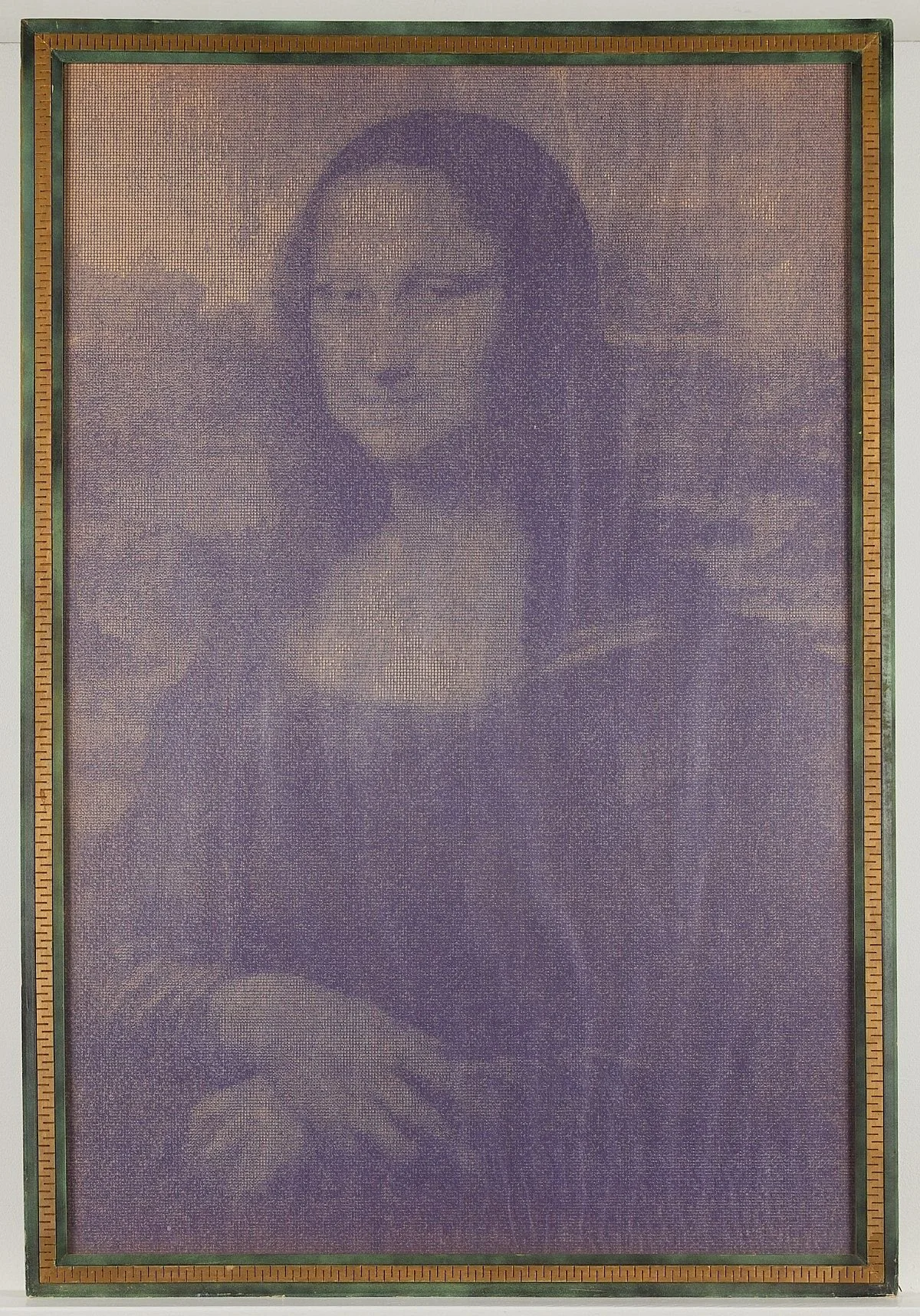 Image 1 of 10
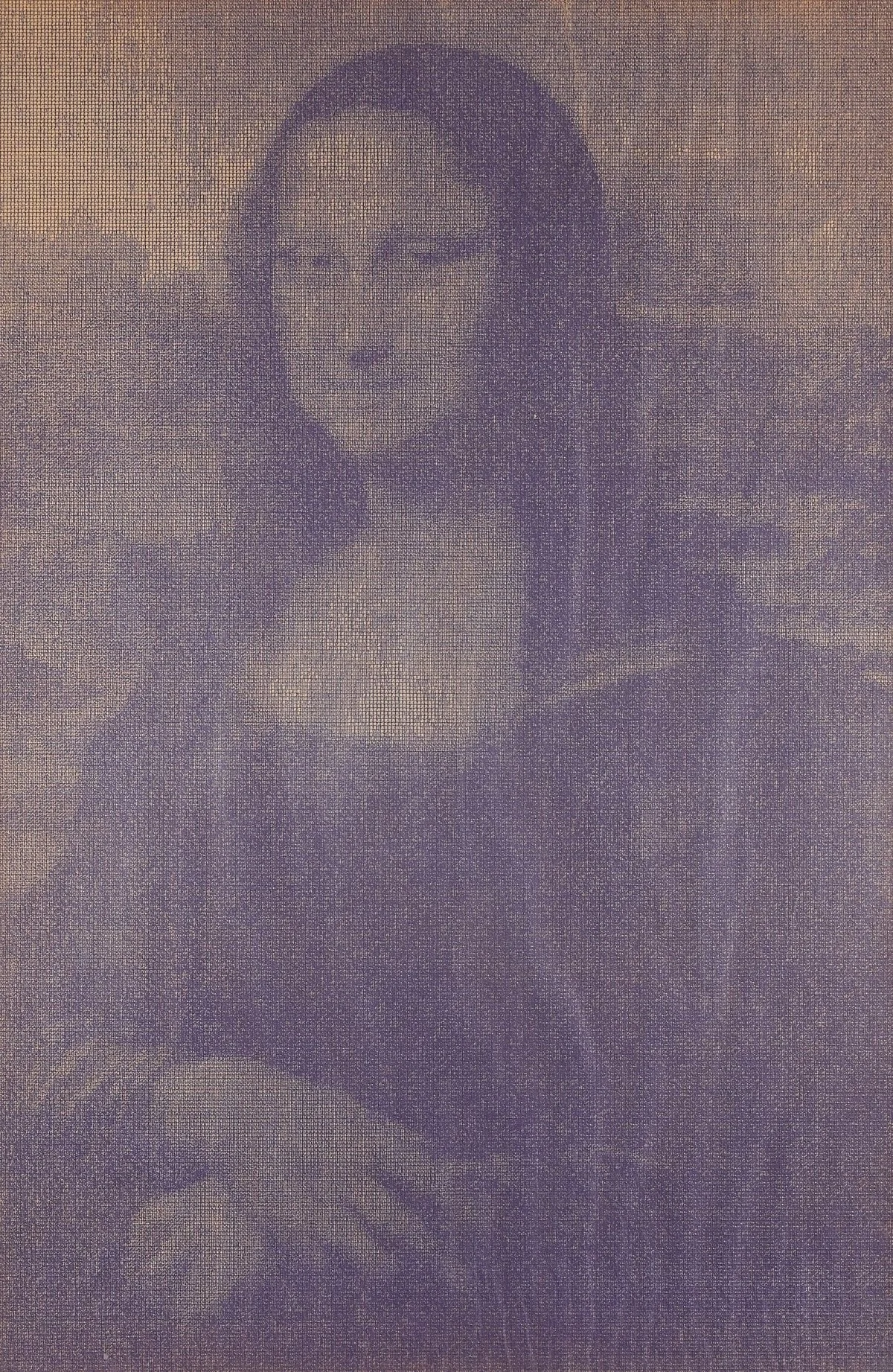 Image 2 of 10
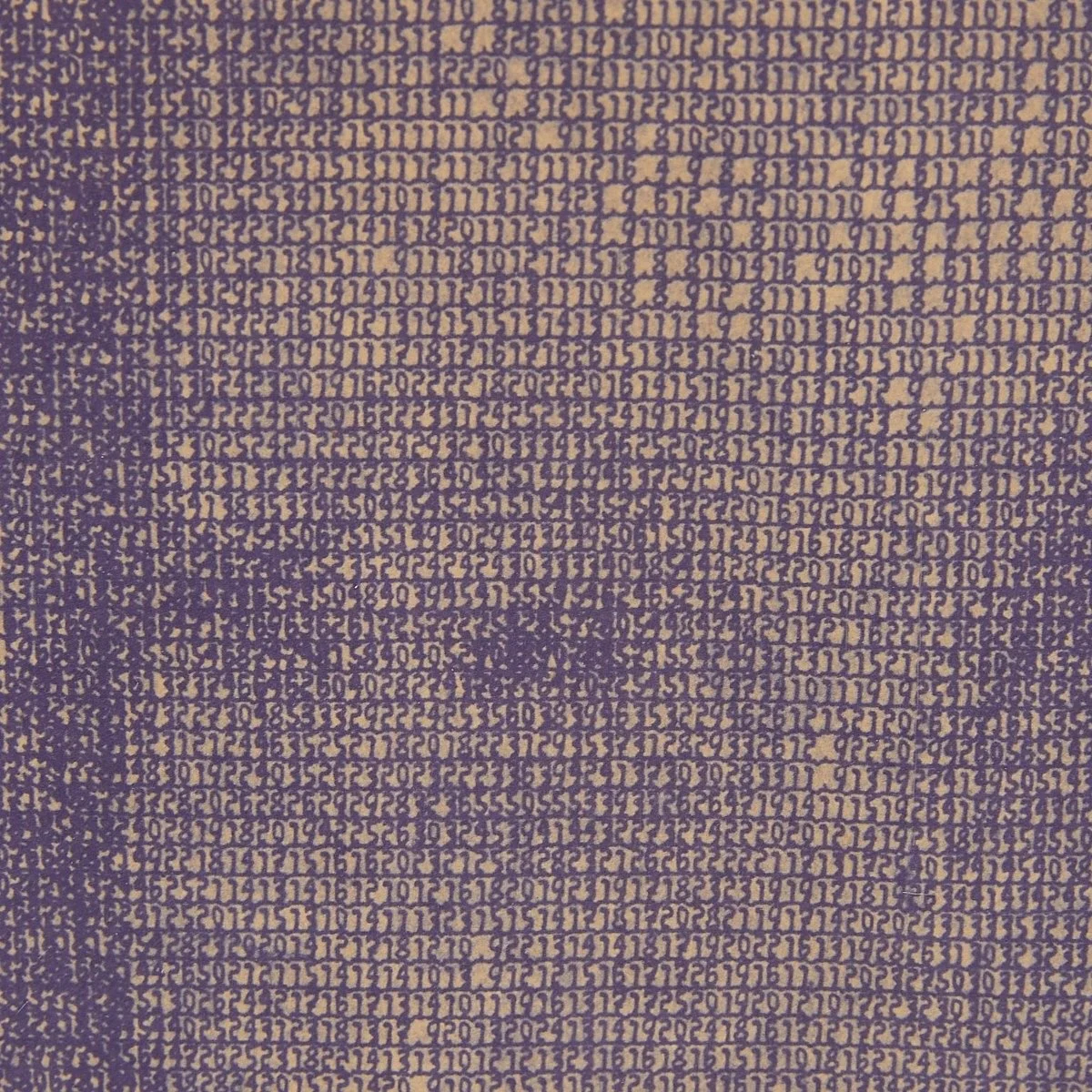 Image 3 of 10
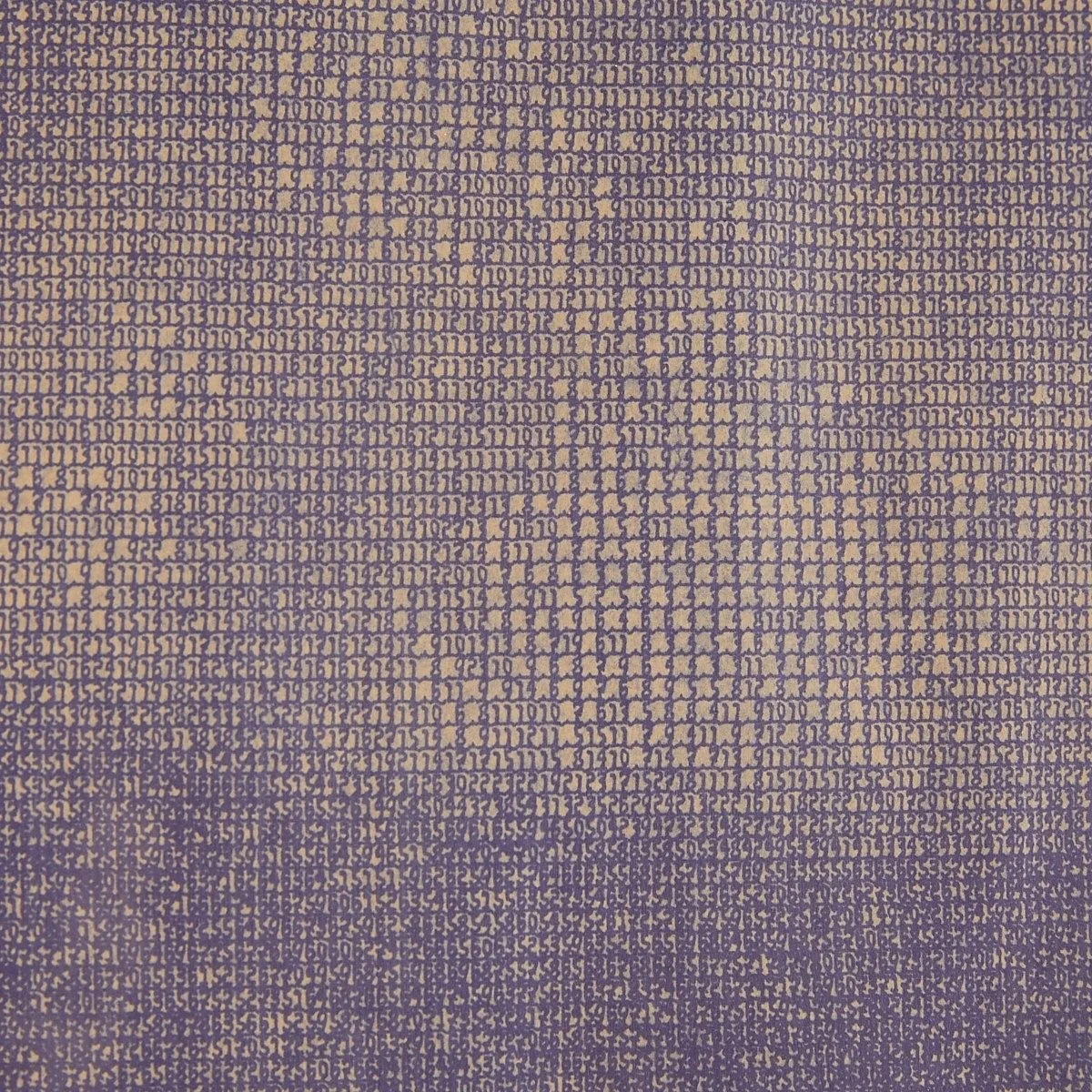 Image 4 of 10
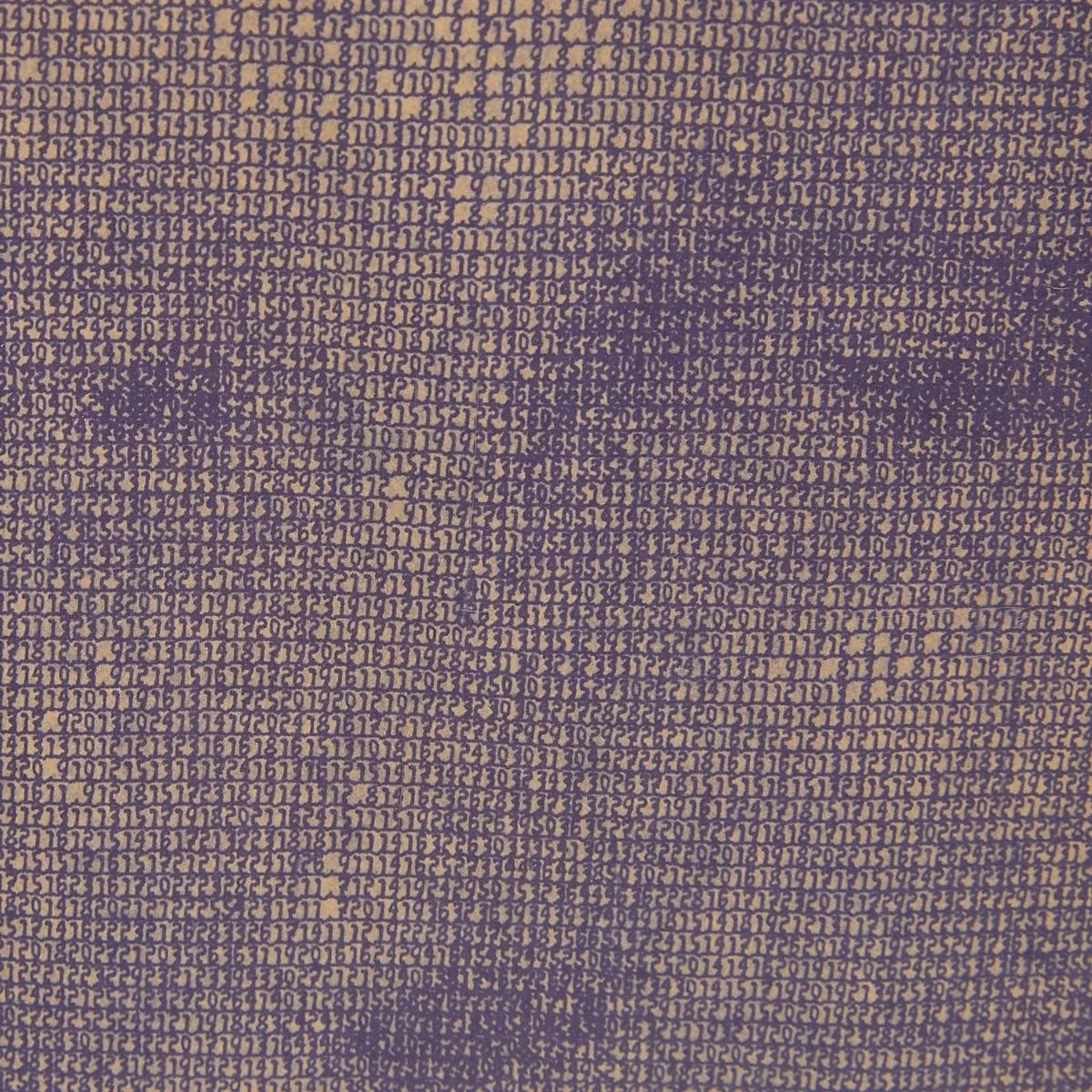 Image 5 of 10
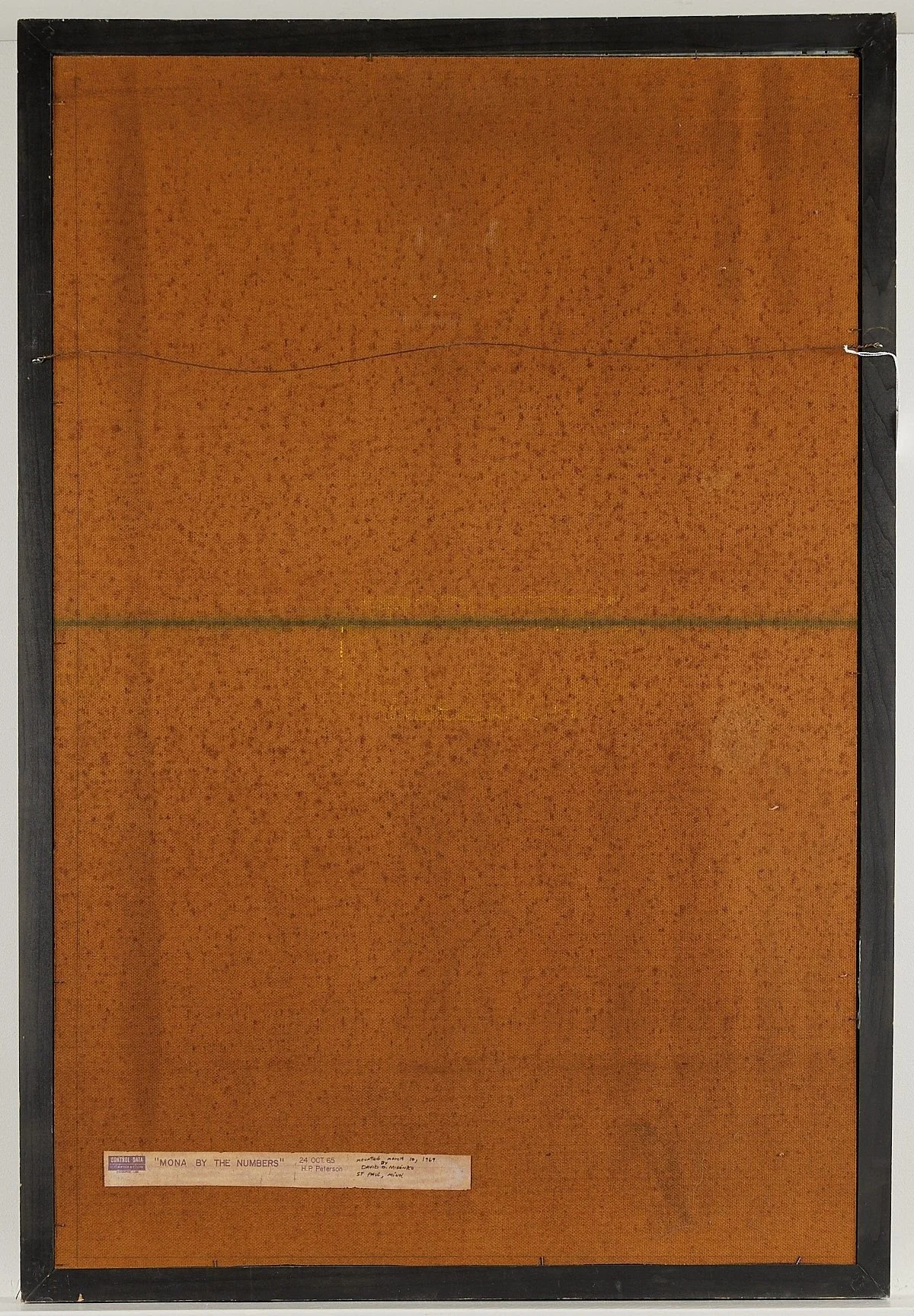 Image 6 of 10
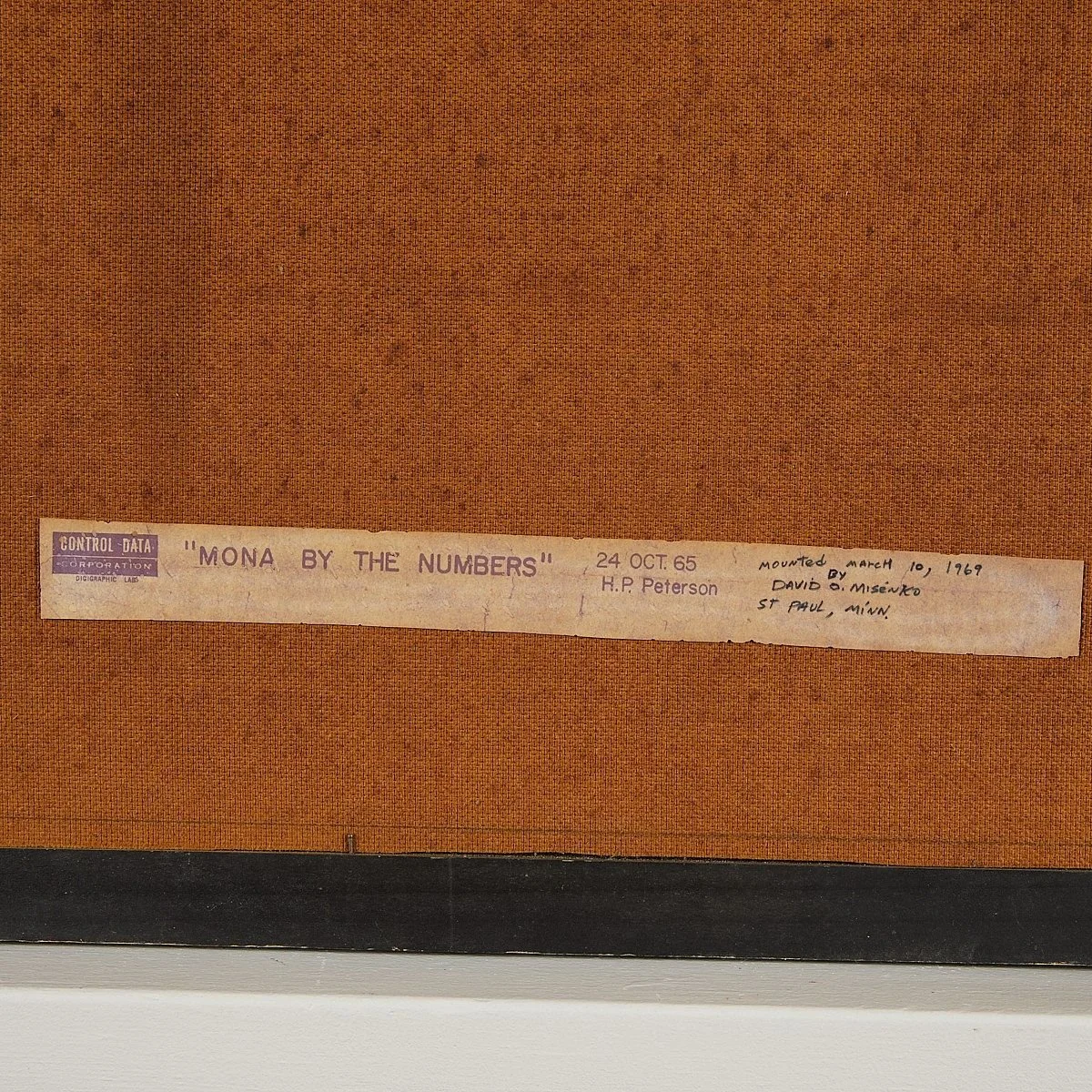 Image 7 of 10
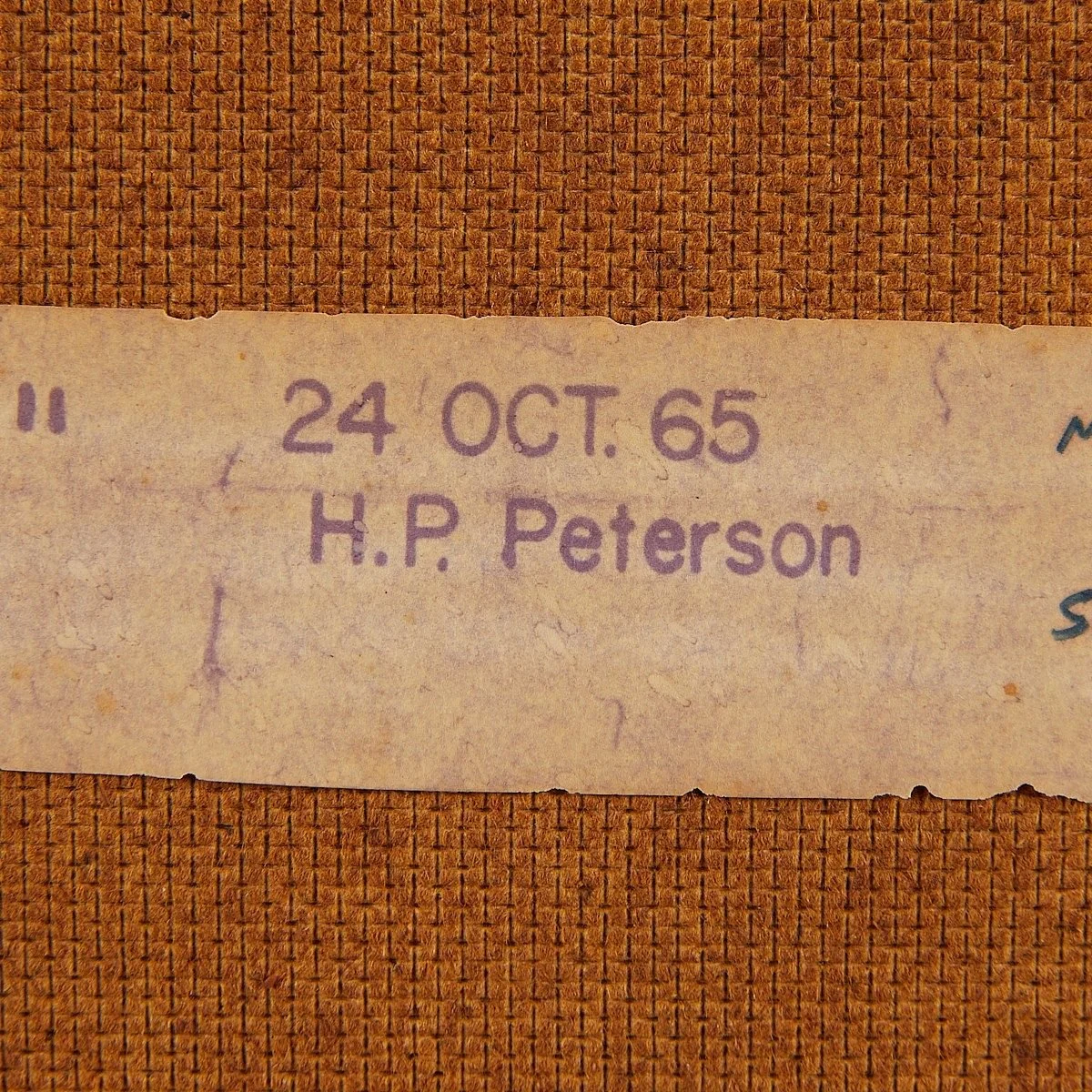 Image 8 of 10
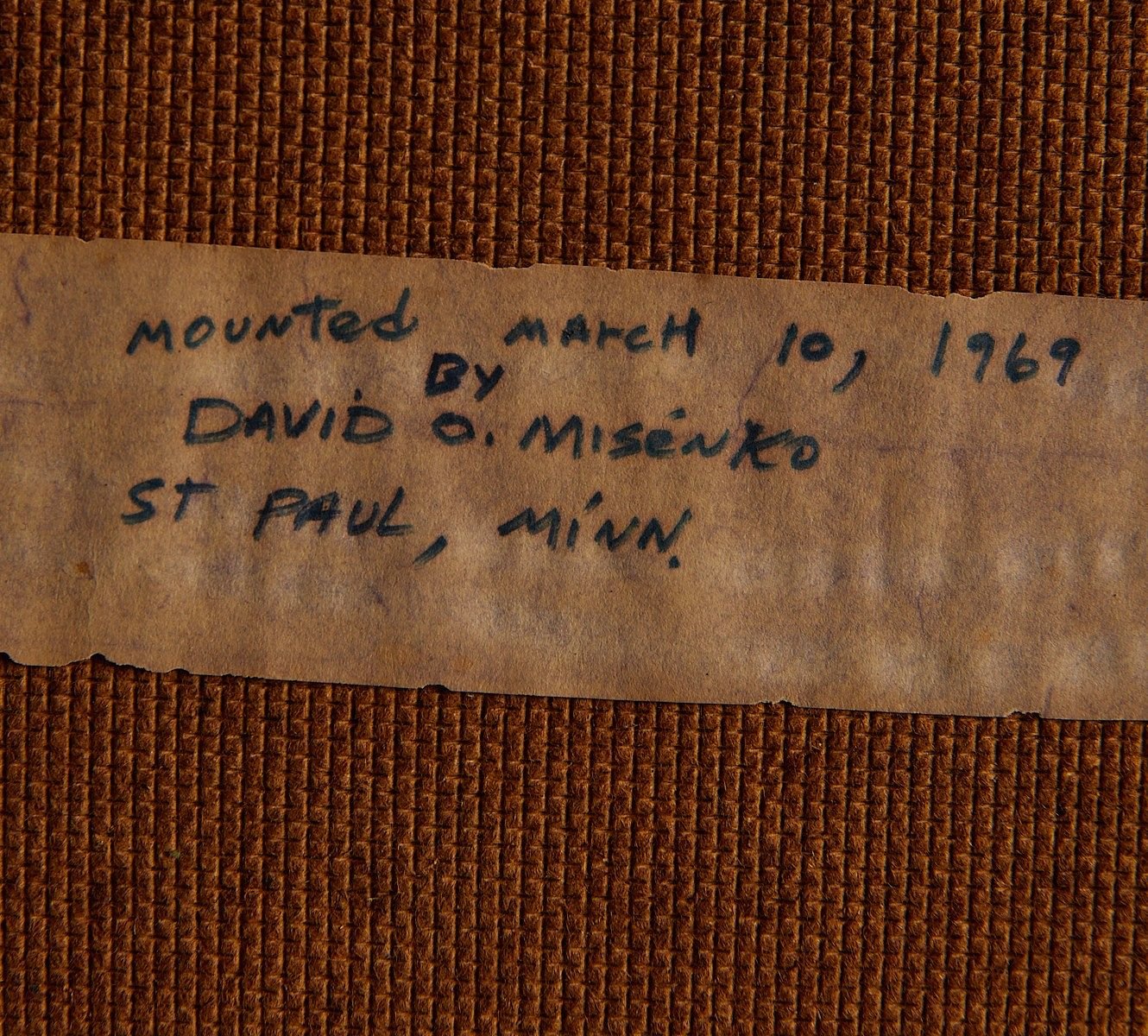 Image 9 of 10
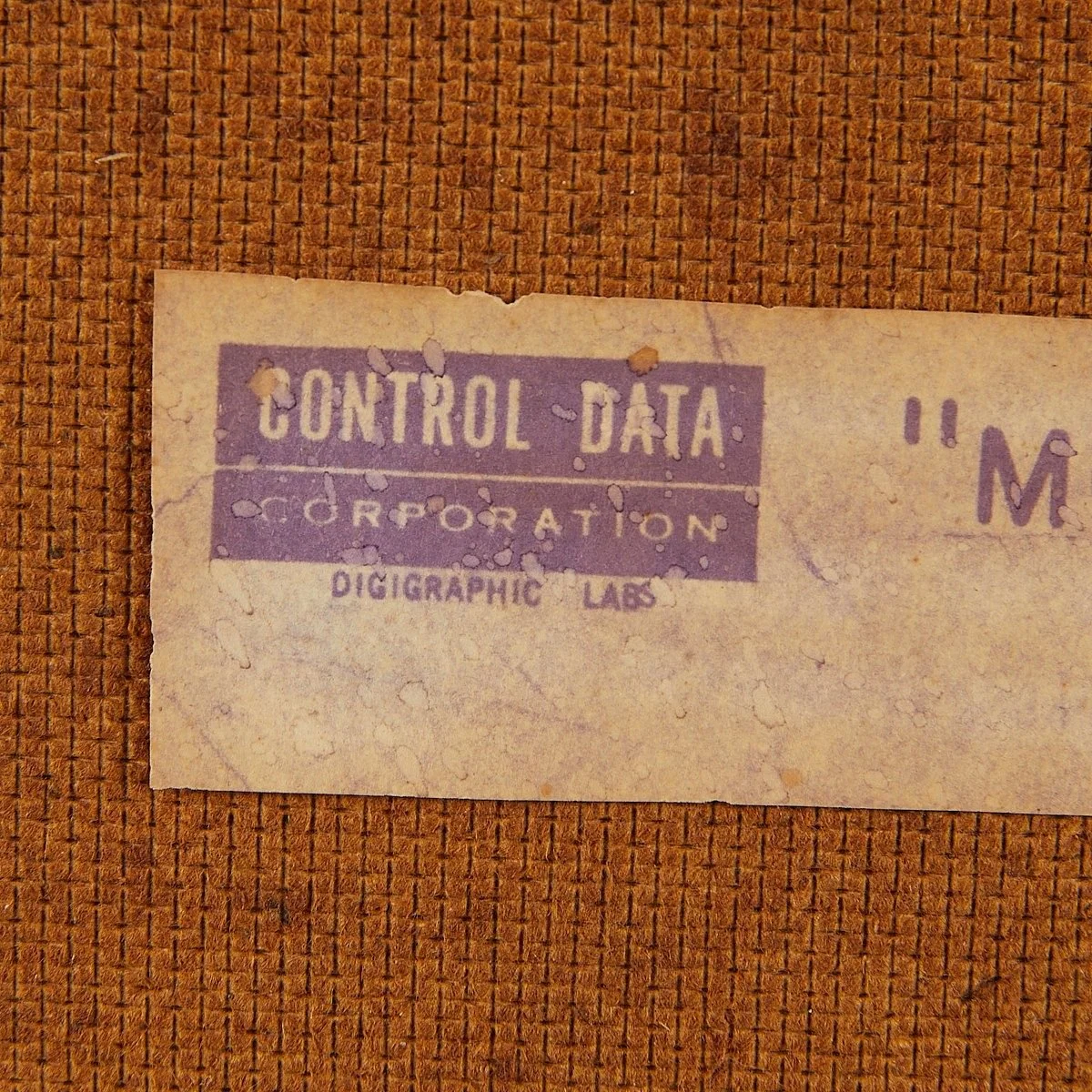 Image 10 of 10